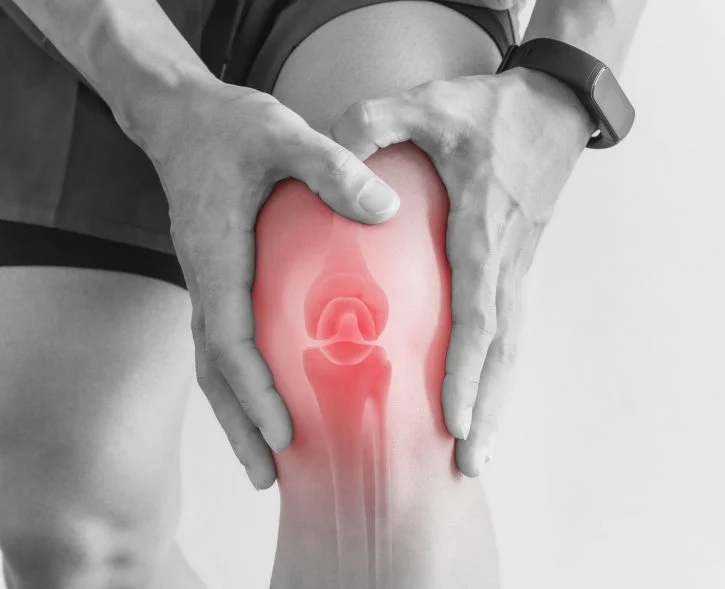
 bonesbalance
Did you know that 1 in 4 Canadians over the age of 55 suffers from knee pain? It is one of the most common age-related health concerns in Canada today, and a leading cause of reduced mobility and independence — especially among older men and women in communities like Niagara Falls, Ontario.
As we grow older, the wear and tear on our knee joints becomes increasingly noticeable. What starts as a mild discomfort can soon turn into a chronic issue that affects daily movement — like climbing stairs, walking through the park, or even sitting for long hours. This is where physiotherapy for knee pain plays a crucial role, not just in reducing pain, but also in improving strength, flexibility, and long-term joint health right here in Niagara Falls, Canada.
What Is Knee Pain and What Causes It?
Knee pain is one of the most common issues that can interfere with everyday activities like walking, bending, or climbing stairs. It typically stems from a combination of factors such as weak supporting muscles, arthritis, previous injuries, or gradual joint deterioration. Quick fixes like ice packs or heat therapy can offer temporary comfort, but they rarely address the root cause for lasting relief.
Physiotherapy for knee pain remains one of the safest and most effective long-term approaches. Targeted exercises, including quadriceps sets, straight leg raises, glute bridges, calf stretches, and hamstring stretches work together to strengthen the knee joint, restore flexibility, and significantly ease discomfort. When practised consistently, these movements not only help you return to pain-free mobility but also reduce the risk of future knee complications.
Physiotherapy for Knee Pain: Best Exercises & Treatment Guide
Physiotherapy for knee pain helps strengthen the muscles around the knee, such as the thighs and hips, while improving movement and flexibility. Simple exercises like straight leg raises, wall sits, and heel slides can reduce pressure on the knee, improve balance, and help relieve pain caused by arthritis or injuries.
The majority of us often encounter knee pain; around 20 per cent of the world population face this problem. According to a 2024 systematic review published on PubMed, knee osteoarthritis alone affects millions globally and is the leading cause of disability, making early physiotherapy intervention essential for long-term joint health. There are several ways to treat this issue, here we’ll discuss the best physiotherapy exercises for reducing knee pain.
Causes and Symptoms of Knee Pain in Older Adults
Causes of Knee Pain You Should Know
Knee pain is extremely common among older adults and tends to worsen with age. As the body ages, joints gradually become stiffer and lose their natural flexibility. The fluid inside the joints that allows smooth movement begins to decrease over time. Without enough of this fluid, bones and joints start rubbing against each other, leading to pain and discomfort. The muscles surrounding the knee also grow weaker, making it harder to support the joint properly. In some cases, bones become more fragile, making them prone to fractures that take much longer to heal than in younger years.
There are several reasons why knee pain develops in older adults. Some of the most common causes include:
- Osteoarthritis or arthritis, is a natural form of joint pain that develops with age
- Old injuries that never healed completely or correctly
- Torn or damaged ligaments around the knee joint
- Previous bone fractures that affected the knee area
- Sitting for long hours in tight, cramped, or bent positions
- Kneeling on hard surfaces for extended periods of time
- Knee injuries caused by falls, accidents, or sudden impact
- Bacterial or viral infections developing inside the joints
- Other forms of arthritis such as gout or pseudogout
Gout is a specific type of arthritis that occurs when uric acid, a natural waste product in the body, accumulates in the joints. This buildup causes the knee to become swollen, red, and intensely painful.
If these symptoms are affecting your daily life, physiotherapy for knee pain can make a real difference. It helps reduce swelling, rebuild strength in weakened muscles, and gradually restore comfortable movement.
Symptoms of Knee Pain You Should Know
Knee pain feels different for every person. It depends on the cause and the exact location of the pain. Some people feel it at the front of the knee, while others feel it on the side or deep inside the joint. But there are some common signs that most people with knee pain experience.
Here are the most common symptoms of knee pain:
- Swelling and stiffness around the knee
- Redness and pain when the knee is touched
- A cracking or popping sound when the knee moves
- Weakness in the leg muscles
- Poor balance or a feeling that the knee may give out
- Difficulty getting up from a chair or rising quickly
- Trouble fully straightening the leg or knee
If you notice any of these signs regularly, it is a good idea to see a doctor. Many people find great improvement with physiotherapy for knee pain, which uses simple exercises to build strength, improve balance, and restore movement.
The knee possesses a very complex structure made up of bones, cartilage, tendons, and ligaments, which further is more susceptible to various factors, including strain, sprain, fractures, and can degenerate over time. Often, quick, abrupt movement & twisting of the foot can be a major cause of knee injury.
In physiotherapy, stretching and strengthening exercises are highly effective as part of physiotherapy for knee pain and help provide relief from discomfort while restoring movement. Knee pain physiotherapy focuses on improving flexibility, reducing stiffness, and strengthening the muscles around the knee joint for better support. In case you get an injury or feel severe pain in your knee, then you should visit a doctor immediately & consult with him to acquire better treatment.
The best physiotherapy clinics are always equipped with modern technology, and their physiotherapists are well-qualified as well as experienced to examine, diagnose, and provide knee pain physiotherapy treatment for different types of knee conditions. They can suggest effective physio for knee pain exercises that support faster healing and recovery.
Regular knee physiotherapy sessions can also help improve mobility, reduce inflammation, and support long-term joint health. Whether you are dealing with sports injuries treatment, arthritis, ligament strain, or stiffness, physiotherapy treatment for knee pain plays an important role in recovery. Professional physiotherapy for knee joint pain can help patients regain strength, improve balance, and safely return to normal daily activities.
Physiotherapy Treatment for Knee Pain
You might feel some signs and symptoms if you have knee pain. This includes weakness or instability and you may feel difficulty in walking or moving your leg. Moreover, a person with a knee injury may experience swelling, stiffness, redness, and warmth to the touch. A popping and crunching sound may also accompany.
Top Benefits of Physical Therapy for Knee Pain
If you’re suffering from chronic knee pain, gentle stretching and strengthening exercises can help relieve pain and improve your range of motion and flexibility. — a finding supported by a 2024 meta-analysis on PubMed analysing data from over 12,000 patients with chronic knee conditions, which confirmed that adapted physical exercise programs produce the greatest reduction in pain and disability scores. Exercise in a controlled manner is more effective than keeping the knee in a rest position. Sometimes, it may produce a negative effect. If you wish to start the exercise, then it’s important to talk with your physical therapist to ask about whether the specific exercise is fit for you or not. If you feel pain due to osteoarthritis, then your physical therapist can suggest knee strengthening exercises for osteoarthritis to attain a normal range of motion. The Cleveland Clinic recommends physiotherapy as a first-line, non-surgical treatment for osteoarthritis, noting that strengthening the muscles surrounding the knee joint directly reduces cartilage pressure and slows disease progression in the shortest span of time.
Lower-Body Stretches for Knee Pain
Stretching your lower body can help your knee move better and feel less stiff. It also makes everyday movements like walking and bending easier.
Before you start stretching, warm up for 5 to 10 minutes. You can walk, cycle slowly, or use a simple cardio machine. This helps prepare your muscles and reduces the risk of injury.
After warming up, do these stretches. You can also repeat them after your strengthening exercises. Try to practice them at least 4 to 5 times a week for better results.
How Physiotherapy Helps with Knee Pain
Physiotherapy is one of the best ways to treat knee pain without depending on strong medicines or surgery. A trained physiotherapist looks at your pain, your posture, and how well your knee moves. Based on that, they guide you through simple and safe exercises that help your knee get stronger, reduce swelling, and improve flexibility.
With regular practice, physiotherapy for knee pain makes everyday activities much easier, like walking, standing, or getting up from a chair. It also improves your balance and builds muscle strength, so your knee feels more stable and steady. Whether you do it at home or visit a clinic, physiotherapy helps your knee work better and hurt less over time.
Also Read: Physiotherapy For Joint Pain ; Physiotherapy For Disc Burge ; Physiotherapy For Back Pain
5 Best Physiotherapy Exercises for Knee Pain Relief
Knee pain can make daily life difficult and limit simple movements, but physiotherapy exercises for knee pain are a safe and effective way to manage it. These exercises help strengthen the knee, improve blood flow, and keep the joint healthy over time. Doctors and physiotherapists recommend them because they support knee health in a natural way, without the need for strong medicines or surgery.
The following exercises are very helpful for people dealing with knee osteoarthritis, stiffness, or weakness due to age. They are easy to do at home and work well as home physiotherapy exercises for knee pain.
1. Heel and Calf Exercise
This is a wonderful exercise that can produce positive effects on the muscles of your lower leg, mainly on the calf. And for this, you should stand while facing the wall and placing your hands on the wall.
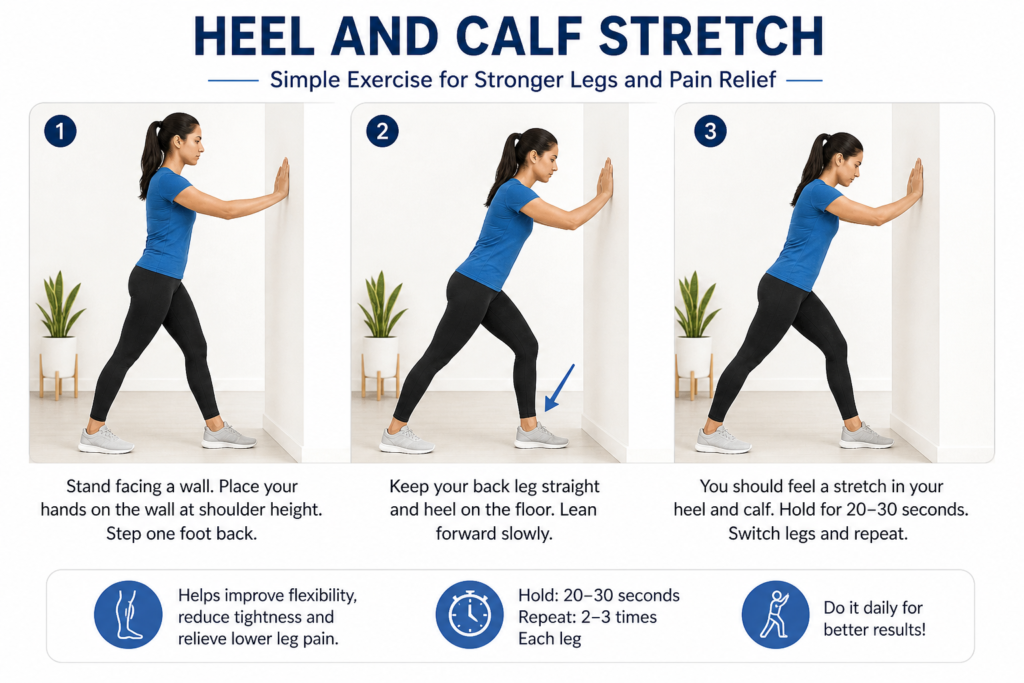
The calf muscles play an important role in supporting the lower leg and keeping the knee stable. When these muscles are tight or weak, knee pain can get worse and simple activities like walking or standing can become harder.
How to do it:
- Stand facing a wall and place both hands on it for support.
- Keep your toes pointing forward and your knees slightly bent.
- Stretch your back leg gently and hold the position for 30 to 40 seconds.
- Switch to the other leg and repeat.
Benefits: This is one of the best knee pain exercises for early recovery from a knee injury. It loosens tight calf muscles, improves flexibility, and helps reduce knee pain over time.
2. Quadriceps Sets (Quad Sets)
This exercise is another wonderful knee pain physiotherapy exercise that targets your quadriceps, and this exercise is quite effective for improving the flexibility in the hip area.
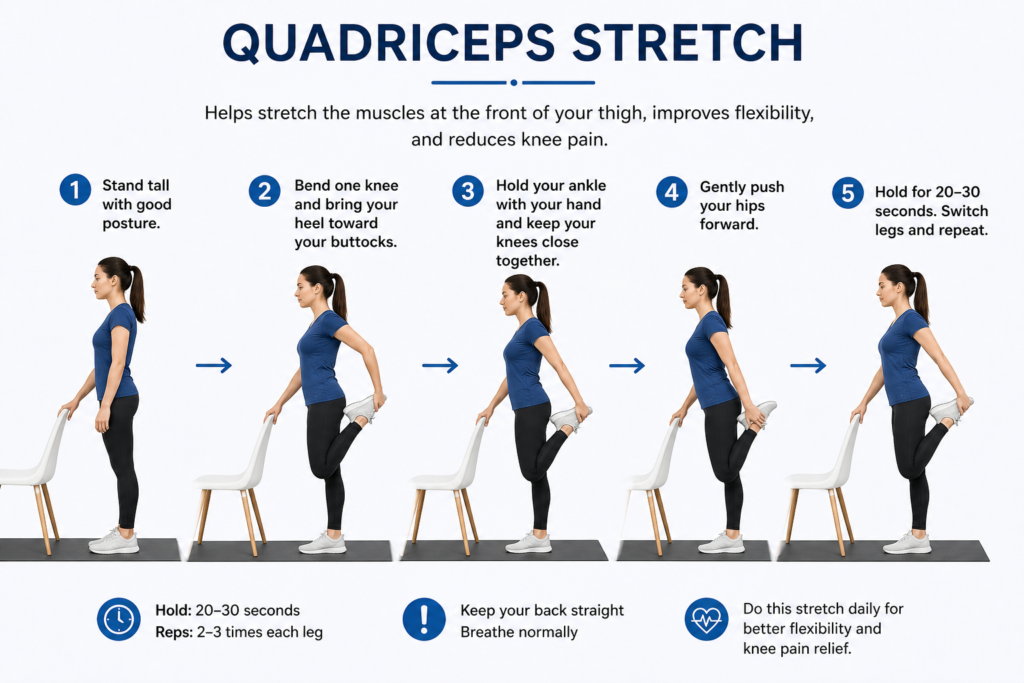
The quadriceps are the large muscles at the front of the thigh that help keep the knee stable and supported. When these muscles are weak, knee pain can get worse and the joint may feel unsteady.
How to do it:
- Lie flat on a bed with both legs relaxed.
- Keep one leg straight and tighten the muscles of that thigh.
- Hold for 5 to 10 seconds and then relax.
- Repeat this 10 to 15 times every day.
Benefits: This is a simple and effective knee strengthening exercise that improves support around the joint and helps reduce pain over time.
3. Hamstring stretch
Hamstring stretching is also an excellent exercise which influences the muscles of the back thigh. Moreover, it should be noted that it stretches the back of your leg till the base of the glutes. While performing this exercise, you may feel a stretch in your calves.
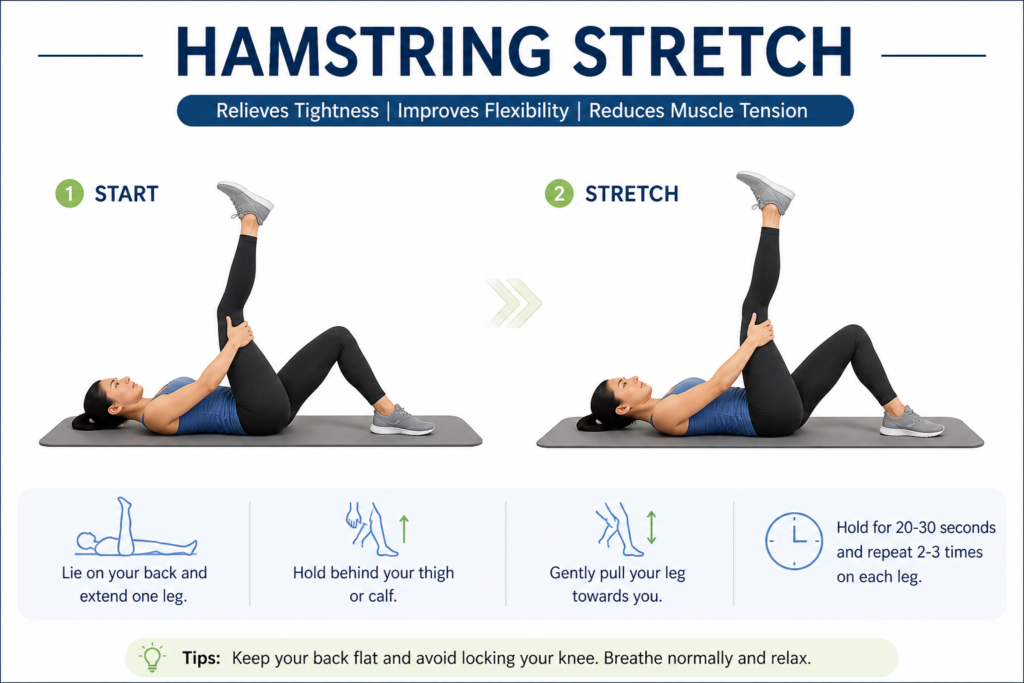
Tight hamstrings can cause pain while walking, bending, or doing other daily movements. Stretching them regularly helps improve flexibility and makes everyday activities much easier.
How to do it:
- Sit on a chair and stretch one leg out straight in front of you.
- Keep your back straight and lean forward a little.
- Hold this position for 15 to 20 seconds and then repeat with the other leg.
Benefits: This is one of the best daily exercises for knee joint pain. It helps increase flexibility and slowly reduces pain and discomfort over time.
Strengthening exercises for knee pain
You can reduce pressure on your knee by making the muscles around it stronger. Try to exercise regularly and focus on your thighs (front and back), hips, and glutes. A 2024 systematic review in PubMed on resistance training for osteoarthritis confirmed that 9+ weeks of progressive strengthening exercises significantly reduce knee pain and improve functional scores in OA patients. Strong muscles help support your knee and reduce pain.
4. Half Squat
Half squats are one of the finest ways to strengthen your glutes, quadriceps and hamstrings. And for this, you should stand in a squat position, while keeping your feet at a distance of shoulder width.
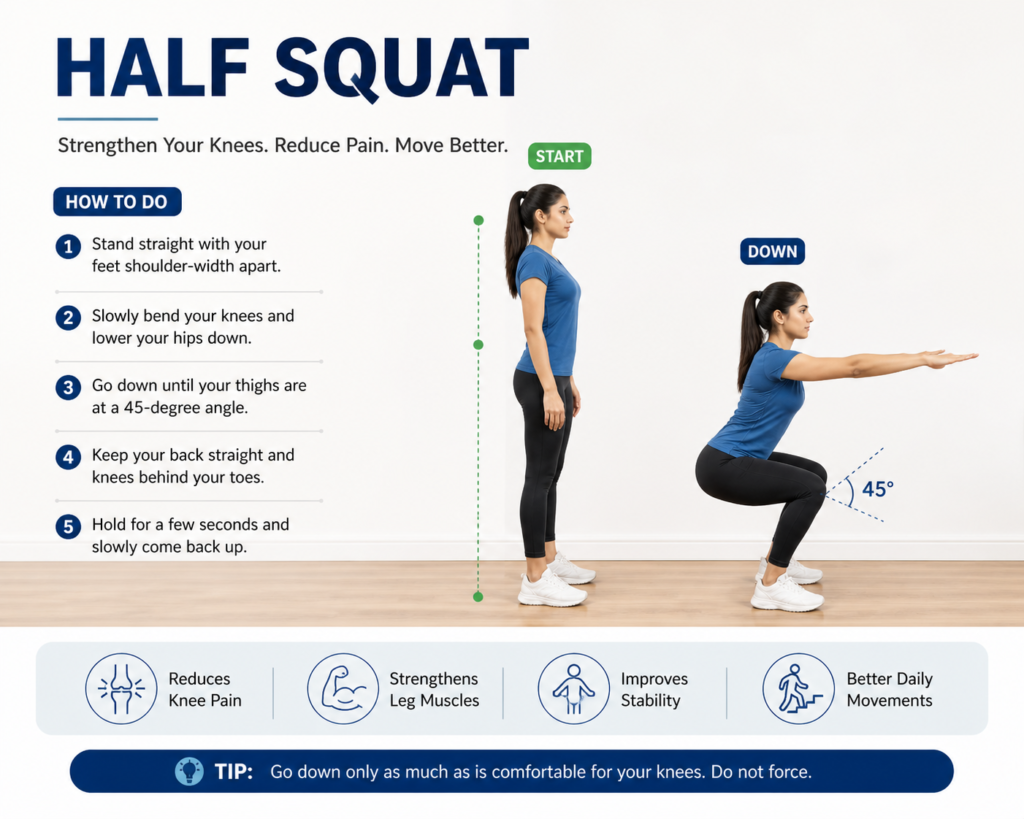
The glutes, quadriceps, and hamstrings are key muscles that support the knee during movement. When these muscles are weak, the knee takes more pressure, which can lead to pain and discomfort over time.
How to do it:
- Stand with your feet shoulder width apart and look straight ahead.
- Slowly squat down halfway, do not go all the way down.
- Hold that position for a couple of seconds.
- Push through your heels and slowly stand back up.
- Repeat this 10 to 15 times every day.
Benefits: This is an excellent knee pain physiotherapy exercise that strengthens the glutes, quadriceps, and hamstrings. It helps reduce pressure on the knee joint and supports better movement over time.
Read Blog: Knee Pain Physiotherapy Treatment: Simple Exercises and Best Physiotherapy for Knee Pain
5. Calf raises
This exercise is also pretty much useful for making the back of the lower legs much stronger, along with the calf muscles. You should perform this exercise in the following steps:
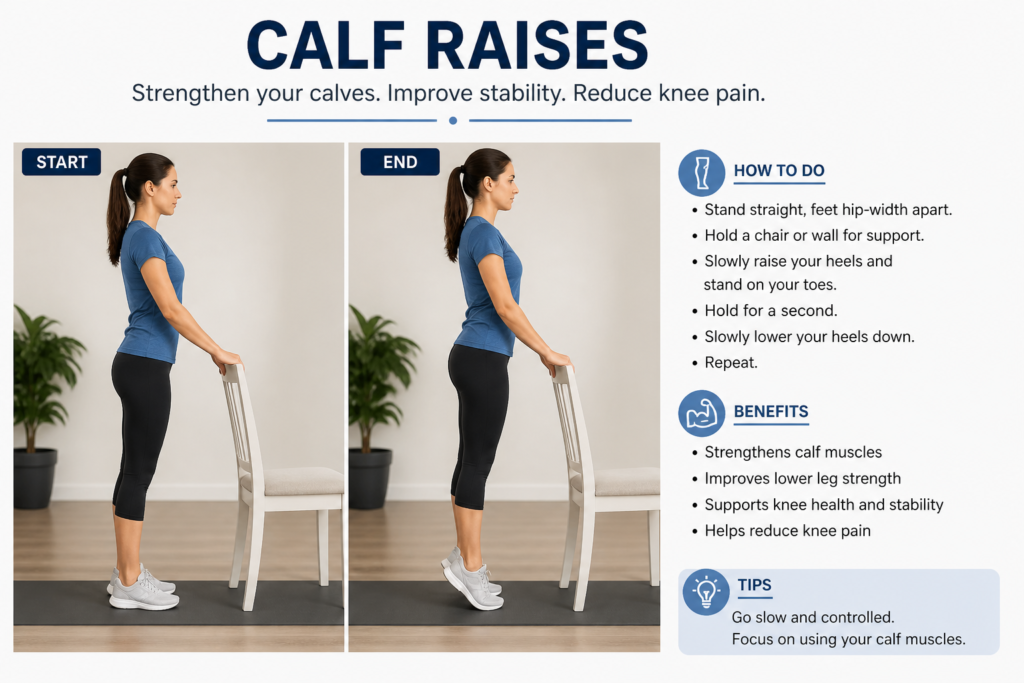
Tight calf muscles can make knee pain worse and affect the way you walk. Stretching them regularly helps improve flexibility and gives relief to the knee joint.
How to do it:
- Stand facing a wall.
- Place one leg forward with the knee slightly bent and the other leg back with the knee straight and heel flat on the ground.
- Gently push against the wall until you feel a stretch in your calf muscle.
- Hold for 15 to 20 seconds and then switch to the other leg.
Benefits: This is a safe and simple exercise for knee osteoarthritis. It helps reduce stiffness and improves blood flow in the knee area.
Extra Tips for Safe Exercise
- Do all exercises slowly and in a careful and controlled way.
- Stop right away if you feel any increase in pain.
- Talk to a physiotherapist if you have arthritis or have had a knee injury before.
- Doing these exercises regularly is the key to getting long-term relief from knee pain.
Other types of exercise for knee pain
Once your knee becomes stronger, you can slowly add more exercises to your routine. It is best to choose low-impact exercises, as they put less pressure on your knee joints compared to high-impact activities like running or jumping.
Some simple low-impact exercises include:
- Yoga
- Tai chi
- Using an elliptical machine
- Swimming
- Stationary cycling
- Water aerobics
- Walking
These exercises help improve movement, reduce pain, and keep your knees healthy without too much stress.
Simple Overall Treatment Plan for Knee Pain
Relief from knee pain depends on the main cause of the problem. Along with doing exercises at home, you can follow these simple steps:
- Apply ice if it helps reduce pain and swelling
- Use a knee support or compression sleeve for better stability
- Take pain relief medicines (like NSAIDs) for a few days if needed
In many cases, physical therapy works better than doing exercises at home. A physiotherapist can understand your condition and create a personalised exercise plan for faster recovery.
They will also guide you on the correct way to do exercises and monitor your progress to help you heal safely and effectively.
Yahan aapka rewritten content hai:
Why Physiotherapy Is Better Than Just Home Remedies
Knee pain is very common, especially in older adults and people with past injuries, weak muscles, or arthritis. Home remedies like ice packs, rest, or painkillers can give some relief for a short time, but they do not fix the real cause of the pain. Relying only on these methods can make the pain come back, reduce movement, and make daily activities like walking, climbing stairs, or standing for long hours much harder.
Physiotherapy for knee pain is a safe, effective, and long-term solution. A trained physiotherapist finds the root cause of your pain and creates a treatment plan that suits your condition. This may include knee strengthening exercises, gentle stretches, manual therapy, and techniques to improve joint movement. With regular physiotherapy, pain reduces, the muscles around the knee get stronger, flexibility improves, and the chances of future injuries go down.
When Should You See a Doctor or Physiotherapist?
In many cases, home remedies and rest alone are not enough to fully recover. Knowing when knee pain requires professional attention is just as important as the treatment itself. You should visit a doctor or physiotherapist if:
- Your knee pain continues for more than a few days without any improvement
- You experience pain while performing everyday activities like walking, climbing stairs, or standing
- Your knee joint appears swollen, feels warm, or looks red
- You notice unusual popping or clicking sounds coming from your knee
- Your knee feels unstable or weak, as if it might give out or lock up suddenly
Seeking the right treatment at the right time can prevent the condition from becoming more serious. Starting physiotherapy for knee pain early significantly improves your chances of a faster recovery and a more comfortable, pain-free life.
How Can Bone and Balance Help You With Your Knee Pain?
- Bone and Balance is a trusted online platform that allows patients to receive professional treatment from the comfort of their own home.
- There is no need to worry about travelling long distances just to get diagnosed or consult a doctor.
- Patients save valuable time that can be better used for rest and self-care during recovery.
- Live interactive sessions are conducted so that patients can have real face-to-face conversations with their assigned doctors.
- Building trust is at the core of everything we do. We go above and beyond to provide full support and make every patient feel comfortable and heard.
- Session timings are always scheduled according to the patient’s convenience, and rescheduling is available whenever needed.
- The moment a patient connects with our doctor, it becomes that doctor’s personal responsibility to guide them toward a healthier life.
- Our doctors remain fully committed to their patients throughout the entire treatment journey.
- Patients can speak openly and honestly about their concerns, with complete assurance that all information stays strictly between the patient and the doctor.
- Every step of the treatment is carefully planned by our doctors, from customised exercise routines to personalised diet charts.
- All doctors on the platform are certified professionals with solid experience and a strong track record of reliable care.
- Bone and Balance offers a complete range of solutions, from simple home remedies to prescribed medications, covering every stage of treatment.
- The trust of our patients is our greatest strength.
Frequently Asked Questions
1. Can physiotherapy help with knee pain?
Yes. Physiotherapy for knee pain can effectively reduce discomfort, restore natural knee joint movement, and build strength in the surrounding muscles. Regular sessions with a qualified physiotherapist support faster recovery and better long-term knee health.
2. What is the best physiotherapy for knee pain?
The most effective physiotherapy combines strengthening exercises, gentle stretches, manual therapy, and targeted treatments like heat or ice application. A well-planned approach using specific knee exercises helps relieve pain and gradually improves overall mobility.
3. How can I do physiotherapy for knee pain at home?
At home, simple exercises like quadriceps sets, straight leg raises, and gentle knee stretches can be very beneficial. Home physiotherapy works well for mild knee pain, but it is always important to follow your physiotherapist’s guidance to avoid making the condition worse.
4. How many physiotherapy sessions are needed for knee pain?
The number of sessions varies based on the severity of the condition. Mild knee pain may improve within 6 to 8 sessions, while more chronic or complex conditions could require anywhere between 10 and 15 sessions. Progress is regularly monitored and exercises are adjusted accordingly.
5. What exercises should I avoid with knee pain?
High-impact activities such as running, jumping, deep squats, or any movement that triggers sharp pain or swelling should be avoided. Always focus on safe and controlled knee exercises, and consult your physiotherapist before adding any new routines to your plan.
